


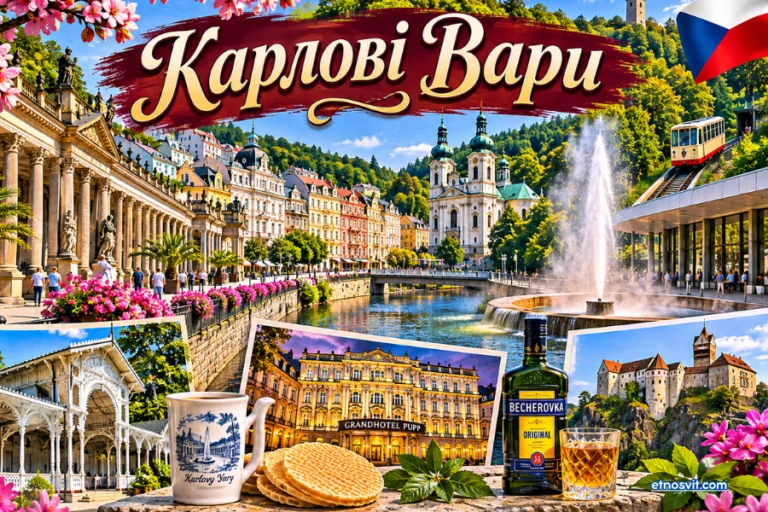
Karlovy Vary – the Aristocratic Pearl of Czechia
Karlovy Vary is one of Europe’s most famous spa resorts, where magnificent architecture, hot mineral springs, picturesque forested hills and centuries-old spa traditions create a distinctive atmosphere. It is a city where you feel like forgetting the rush of everyday life, strolling along elegant embankments, admiring historic colonnades and enjoying the beauty of the surrounding nature.
Monarchs, aristocrats, composers, writers and members of the European elite once came here. Today, the resort attracts tourists from around the world who wish to discover the cultural heritage of Czechia, relax amid picturesque landscapes or take advantage of the facilities offered by local wellness centres.
Karlovy Vary is ideal for both an extended holiday and a one-day excursion during a journey through Central Europe. → Coach Tours to Europe
Where Is Karlovy Vary Located?
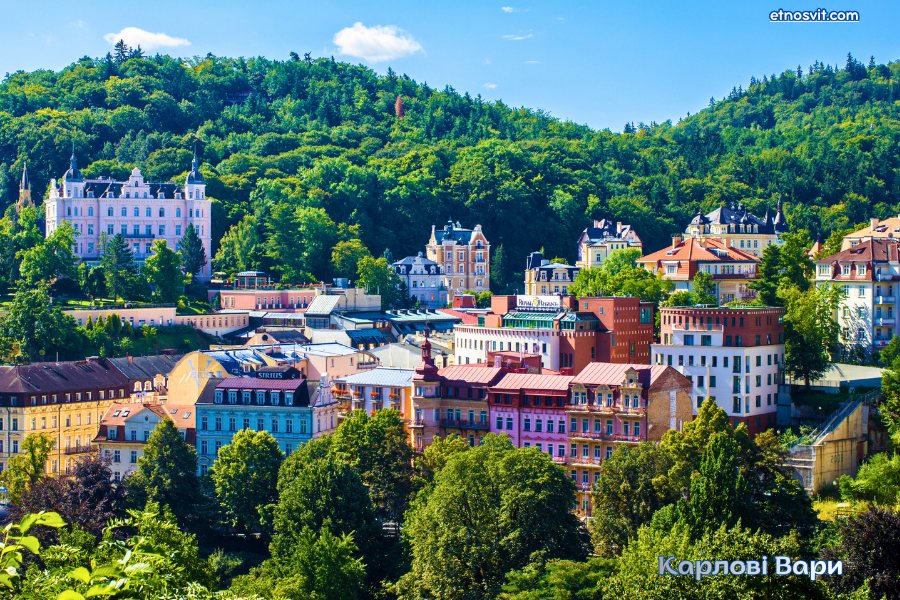
Karlovy Vary is located in the western part of Czechia, in the historical region of Bohemia, approximately 130 kilometres by road from Prague. The city lies in the picturesque valley of the Teplá and Ohře rivers, surrounded by forested hills.
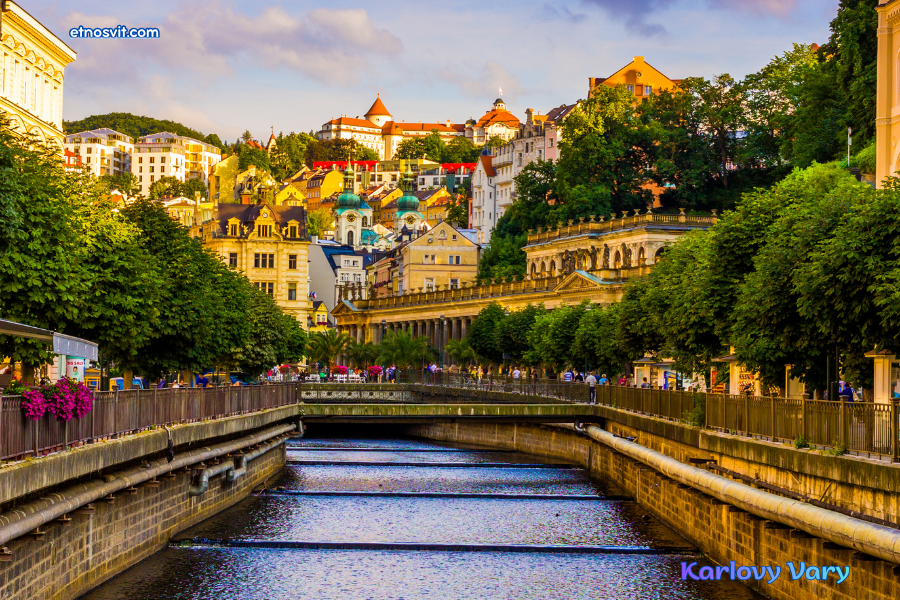
Karlovy Vary – a famous spa resort in Czechia
The distinctive terrain has shaped the unique appearance of the resort. Historic hotels, colonnades, restaurants and pedestrian areas stretch along the Teplá River, while observation points and hiking trails have been established on the surrounding slopes.
Its convenient location makes it possible to combine a visit to Karlovy Vary with sightseeing tours in Prague, Dresden, Nuremberg and other Central European cities.
The History of Karlovy Vary: From a Royal Hunt to a World-Famous Spa Resort
The history of the city is associated with Charles IV, King of Bohemia and Holy Roman Emperor. According to local legend, the hot springs were discovered accidentally during a royal hunt in the 14th century.
In 1370, the settlement was granted town privileges. Over time, a spa resort developed around the natural springs, and its popularity gradually spread far beyond the borders of Czechia.
The city experienced a particularly prosperous period during the 18th and 19th centuries. It was during this time that Karlovy Vary became a fashionable holiday destination for the European aristocracy. The spa infrastructure developed rapidly, with colonnades, hotels, theatres, bathhouses and luxurious villas being constructed.
In 2021, Karlovy Vary was inscribed on the UNESCO World Heritage List as part of the international property known as the Great Spa Towns of Europe, which brings together eleven historic spa towns across seven countries.
What to See in Karlovy Vary: Top 10 Tourist Attractions
The main attractions of Karlovy Vary are concentrated in the spa district of the city. Most of them can be explored on foot, with the option of visiting museums or ascending to observation points along the way.
1. Mill Colonnade
The Mill Colonnade (Mlýnská kolonáda) is one of the city’s principal architectural landmarks. This monumental Neo-Renaissance structure was built between 1871 and 1881 according to a design by architect Josef Zítek.
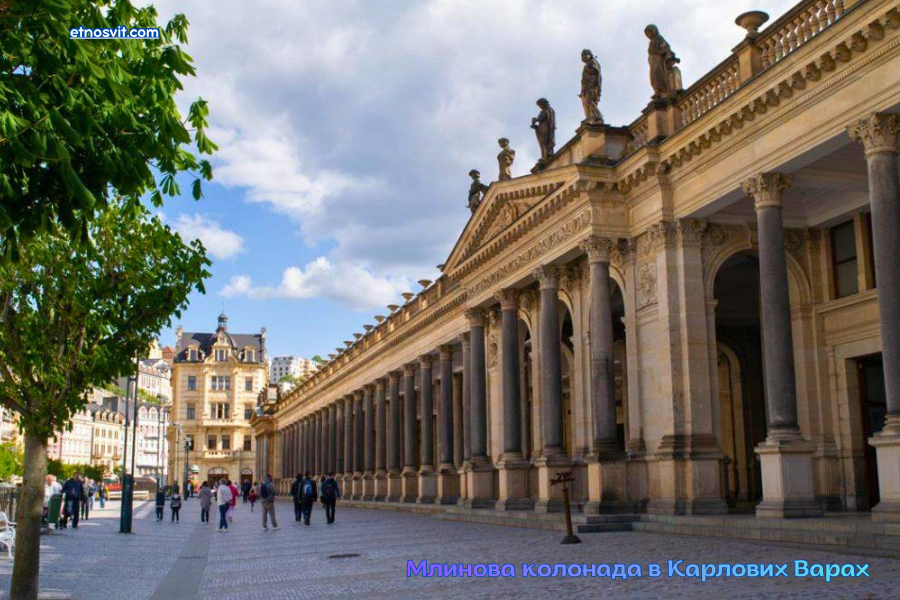
Mill Colonnade in Karlovy Vary – a historic monument of spa architecture
Majestic Corinthian columns, sculptural decorations and spacious galleries give the structure a grand appearance. Inside the colonnade are mineral spring outlets where visitors can discover the traditions of the Karlovy Vary drinking cure.
2. Hot Spring Colonnade and the Vřídlo Spring
Vřídlo is the hottest and most powerful thermal spring in Karlovy Vary. The water temperature reaches approximately 72 °C, and the jet of the natural geyser can rise to a height of up to 12 metres.
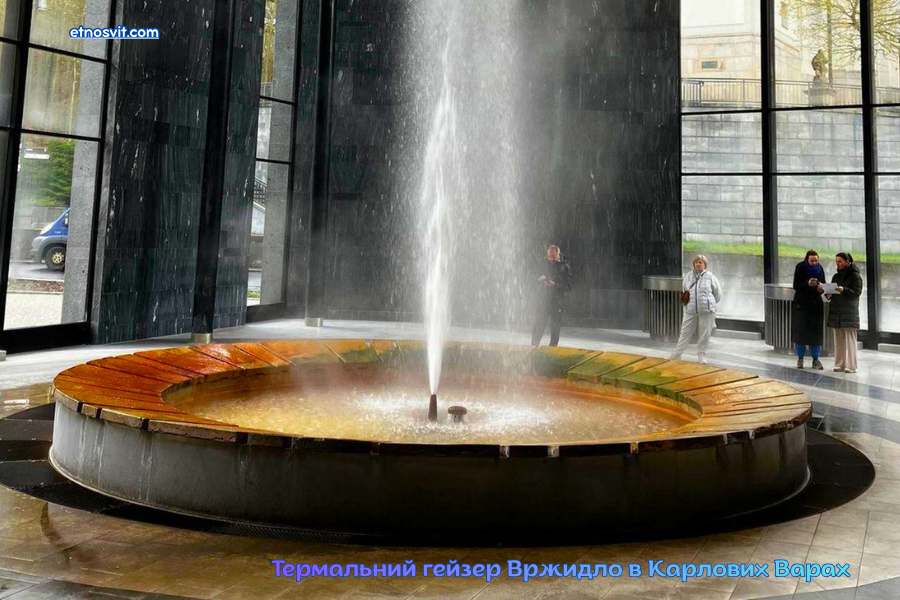
Vřídlo Geyser – the hottest thermal spring in Karlovy Vary
The spring is located in the modern Hot Spring Colonnade, which differs noticeably from the historic architectural structures of the resort. For particularly curious tourists, guided tours of the underground section of the complex are organised, offering an opportunity to learn more about the natural origin of the thermal waters.
3. Market Colonnade
The Market Colonnade (Tržní kolonáda) stands out for its intricate woodcarving and Swiss-style architecture. Its light-coloured decorative structures contrast harmoniously with the surrounding historic buildings.
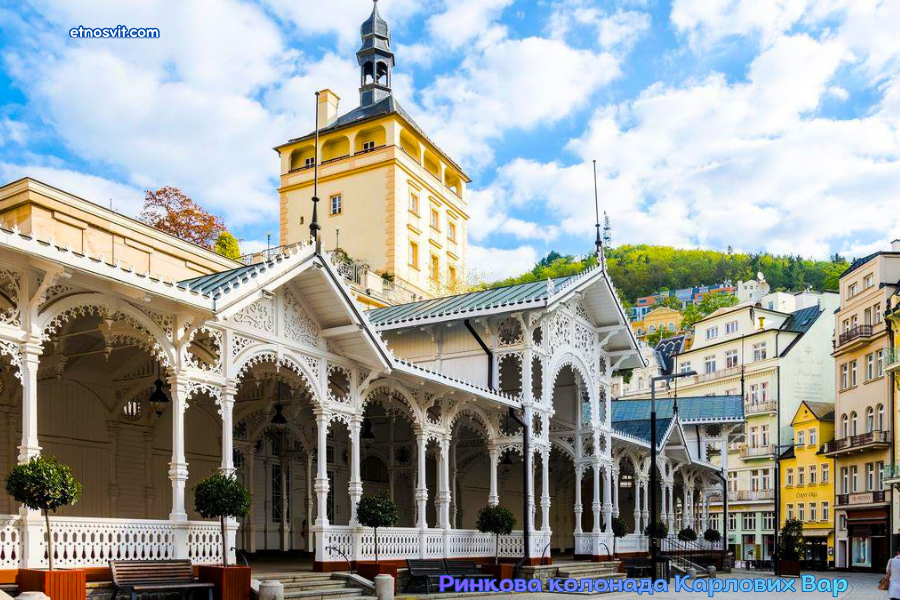
Market Colonnade in Karlovy Vary with decorative woodcarving
It is one of the most photogenic locations in the resort, where the atmosphere of a historic European city can be particularly well appreciated.
4. Park Colonnade
The Park Colonnade (Sadová kolonáda) attracts visitors with its delicate openwork metal structures and romantic design. It is located near the greenery of Dvořák Gardens, where visitors can enjoy a pleasant rest after strolling through the central streets.
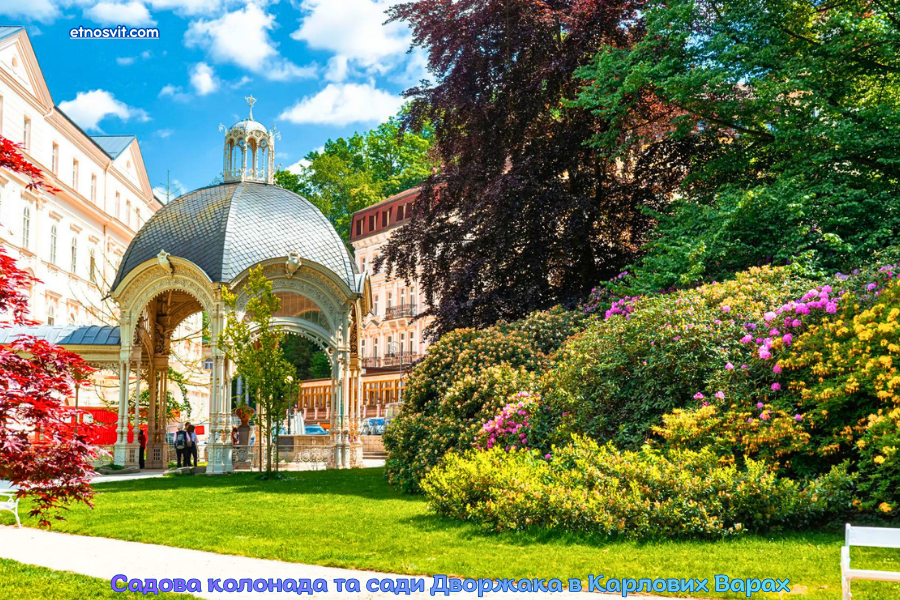
Park Colonnade and Dvořák Gardens in Karlovy Vary
Mineral spring outlets can be found in the vicinity of the colonnade, while the structure itself is considered one of the city’s most elegant architectural landmarks.
5. Castle Colonnade
The Castle Colonnade (Zámecká kolonáda) is situated on a slope above the historic centre. Dating from the early 20th century, the structure is an example of Art Nouveau spa architecture.
Exploring this part of the city is worth combining with a visit to the Castle Tower and a stroll through the adjoining streets. Access to certain areas of the colonnade may be restricted.
6. Diana Observation Tower
The Diana Observation Tower is an excellent place to discover Karlovy Vary from above. It is situated on a forested hill, offering panoramic views of the spa valley, historic buildings and surrounding forests.
The tower can be reached on foot along hiking trails or by funicular, the lower station of which is located near Grandhotel Pupp.
Recreation areas, a restaurant and family-friendly tourist attractions are located near the tower. A walk to Diana makes an excellent addition to a sightseeing tour of the historic centre.
7. Grandhotel Pupp
Grandhotel Pupp is a legendary hotel that embodies the aristocratic history of Karlovy Vary. Its magnificent façade, elegant interiors and long-standing traditions of hospitality have made the complex one of the symbols of the resort.
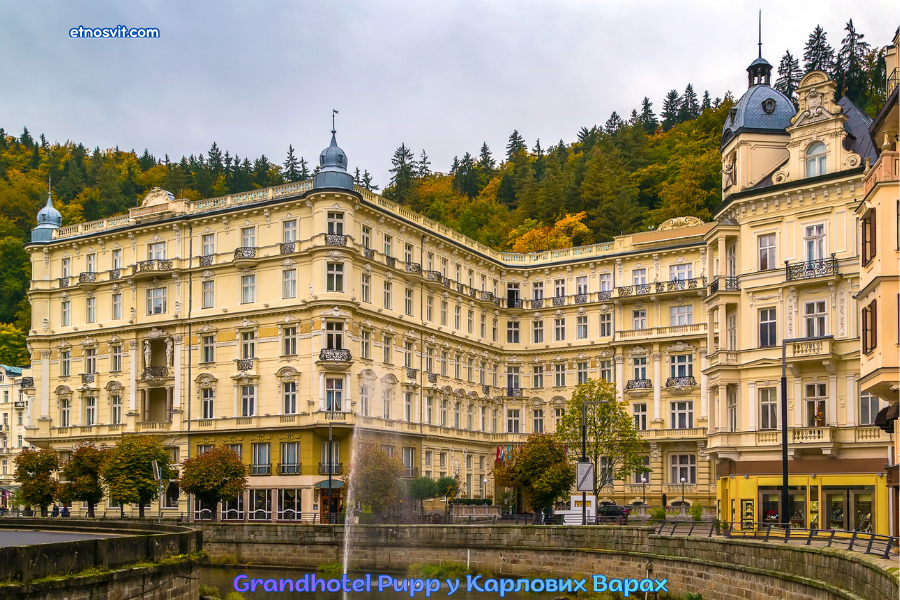
Historic Grandhotel Pupp in Karlovy Vary
The hotel is associated with the world of cinema and the international film festival. Even if you are not planning to stay here, its architecture is worth seeing during a walk along the embankment of the Teplá River.
8. Church of St. Mary Magdalene
Near the Hot Spring Colonnade stands the Church of St. Mary Magdalene, a striking monument of 18th-century Czech Baroque architecture.
The architectural composition of the church, its towers and decorative elements form a harmonious ensemble with the surrounding spa buildings. It is an important historical and cultural landmark of Karlovy Vary.
9. Becherovka Museum
One of the traditional symbols of the city is Becherovka, a Czech herbal liqueur whose production history dates back to 1807.
At the museum centre, located in the former factory building, visitors can discover the history of the company and see historic bottles, documents and exhibits related to the production technology of the beverage.
10. Moser Museum and Glassworks
Karlovy Vary is famous not only for its thermal springs but also for its traditions of artistic glassmaking. Moser products are highly valued among connoisseurs of decorative arts.
The museum introduces visitors to the history of the glassworks, glassworking techniques and a variety of artistic creations. During a special guided tour, visitors can also observe master glassblowers at work. It is advisable to book such visits in advance.
Thermal Springs of Karlovy Vary
Natural mineral springs are the main feature of the resort. Thermal waters rise from deep underground layers and contain various dissolved minerals.
The springs differ in temperature, carbon dioxide content and taste characteristics. Most of the spring outlets accessible to tourists are located beneath the historic colonnades.
A distinctive feature of the resort is a special porcelain cup with a spout, used for drinking mineral water while strolling around the city.
It is important to remember that the thermal water of Karlovy Vary has a specific mineral composition. It is not intended for unlimited daily consumption. Therapeutic drinking cures, the amount of water consumed and the selection of suitable springs must be discussed with a doctor.
What to See in Karlovy Vary in One Day
Even if you have only one day at your disposal, you will have enough time to discover the main attractions of the resort. The historic part of the city is compact, making most places of interest easy to explore on foot.
Recommended itinerary for a one-day sightseeing tour of Karlovy Vary:
- Dvořák Gardens and the Park Colonnade.
- Mill Colonnade and mineral springs.
- Market Colonnade and Castle Tower.
- Hot Spring Colonnade and the Vřídlo Spring.
- Church of St. Mary Magdalene.
- A stroll along the historic Stará Louka Street.
- Viewing Grandhotel Pupp.
- Funicular ride up to the Diana Observation Tower.
- Free time, relaxing in a café and shopping for souvenirs.
Allow approximately 3–4 hours for a leisurely walk through the central part of the city. If you plan to ascend to the Diana Observation Tower, visit museums and have lunch, it is better to set aside a full day.
Holidays in Karlovy Vary: Thermal Pools and Spa Facilities
The modern resort offers various types of relaxation, ranging from traditional spa treatment programmes to short visits to swimming pools, saunas and wellness centres.
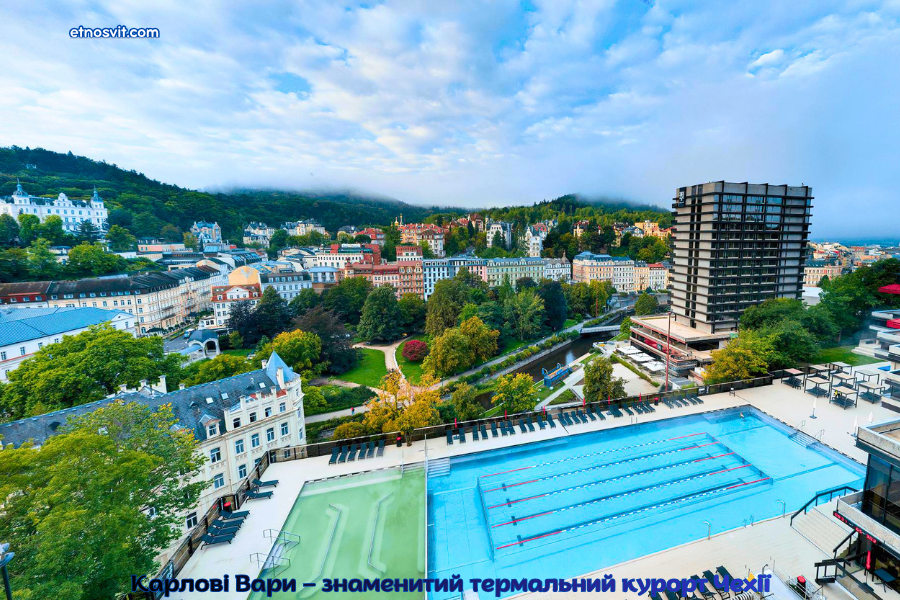
Combining sightseeing tours of the city with relaxation in warm water is particularly appealing to tourists. Some complexes feature outdoor swimming pools overlooking historic buildings and the surrounding hills.
Karlovy Vary is suitable for those wishing to spend several days in a peaceful atmosphere, alternating between walks, cultural events and spa relaxation. At the same time, medical spa treatment should be distinguished from ordinary relaxation treatments.
Karlovy Vary International Film Festival
Karlovy Vary occupies a special place on the cultural map of Europe thanks to the Karlovy Vary International Film Festival (KVIFF). The history of the festival began in 1946.
During the festival, the city fills with filmmakers, actors, journalists and cinema enthusiasts. Film premieres, meetings with creative professionals and cultural events take place here.
For tourists, this is an opportunity to experience the resort in an unusual atmosphere, when its elegant streets become part of a major international cultural event.
What to Taste and Bring Home from Karlovy Vary
Discovering the resort would be incomplete without experiencing its local culinary traditions. Karlovy Vary spa wafers are particularly popular, known for their delicate, crispy texture and variety of fillings.
Among the most characteristic souvenirs from Karlovy Vary are:
- traditional Karlovy Vary spa wafers;
- porcelain cups for drinking mineral water;
- Bohemian glass and crystal products;
- the famous Becherovka;
- cosmetic products based on mineral ingredients;
- decorative items and souvenirs featuring the symbols of the resort.
At local restaurants, visitors can discover traditional Czech cuisine and sample dumplings, goulash, roasted meat and various desserts.
What to Visit Near Karlovy Vary
Western Czechia is rich in historical landmarks, natural landscapes and spa towns. If you have the opportunity to spend several days in the region, it is worth extending your travel itinerary.
- Loket Castle – a medieval fortress overlooking the Ohře River, surrounded by picturesque historic buildings.
- Mariánské Lázně – a famous Czech spa resort with landscaped parks, colonnades and mineral springs.
- Františkovy Lázně – a charming spa town with historic architecture and a peaceful atmosphere.
- Bečov nad Teplou – a historic castle and château complex famous for the Reliquary of St. Maurus.
- Ore Mountains – a natural region with hiking trails, forest landscapes and opportunities for winter recreation.
When Is the Best Time to Visit Karlovy Vary?
Karlovy Vary remains an attractive tourist destination throughout the year. Each season reveals a different side of the city.
- Spring – a period of blooming parks, pleasant walks and the beginning of the active spa season.
- Summer – a time for cultural events, the film festival, sightseeing tours and journeys through the surrounding forests.
- Autumn – an excellent opportunity to enjoy golden landscapes, cosy cafés and the quieter pace of the resort.
- Winter – a season of romantic walks, festive illuminations and relaxation in warm swimming pools.
For a first sightseeing visit to Karlovy Vary, the period from May to October may be particularly comfortable.
Useful Tips for Tourists
- Wear comfortable shoes, especially if you plan to walk along forest trails and climb hills.
- The historic centre can be explored without using public transport.
- Check the current opening hours before visiting museums, the funicular and spa complexes.
- The official currency of Czechia is the Czech koruna.
- Do not consume large quantities of thermal mineral water without medical advice.
- For panoramic photographs of the city, visit the Diana Observation Tower or other observation points.
- During the international film festival, it is advisable to book accommodation and excursions in advance.
Tours to Karlovy Vary – Discover the Spa Resorts of Czechia
Karlovy Vary is more than just a thermal spa resort. It is a unique city with a rich history, refined architecture, cultural traditions and picturesque natural landscapes. Visiting it will be a memorable addition to a journey through Czechia and Central Europe.
Organised coach tours are a particularly convenient way to discover the city, allowing visitors to combine sightseeing tours in Karlovy Vary, Prague and other European cities.
Choose tours to Czechia from Ukraine offered by the Etnosvit travel company, explore the country’s most interesting destinations and discover the unique atmosphere of European spa resorts.
Karlovy Vary: Frequently Asked Questions by Tourists
What Is Karlovy Vary Famous For?
Karlovy Vary is famous for its thermal mineral springs, historic colonnades, spa architecture, international film festival, Karlovy Vary spa wafers, Moser glass products and Becherovka liqueur.
What Are the Must-See Attractions in Karlovy Vary?
The main tourist attractions include the Mill, Park, Market and Hot Spring colonnades, the Vřídlo Spring, the Diana Observation Tower, Grandhotel Pupp and the Church of St. Mary Magdalene.
Can You Explore Karlovy Vary in One Day?
Yes, one day is sufficient to discover the main attractions of the historic centre, stroll along the embankment, see the thermal springs and ascend to the Diana Observation Tower. It is better to allow additional time for visiting museums and spa complexes.
How Far Is Karlovy Vary from Prague?
The distance by road is approximately 130 kilometres. Travelling by coach or car usually takes around two hours, depending on the route and road conditions.
Can You Drink Mineral Water in Karlovy Vary?
Many colonnades have mineral spring outlets accessible to visitors. However, regular consumption of thermal water and therapeutic drinking cures must be discussed with a doctor.
What Is the Most Famous Thermal Spring in Karlovy Vary?
The most famous is Vřídlo, a natural hot spring with a water temperature of approximately 72 °C and a jet that can reach a height of 12 metres.
When Is the Best Time to Visit Karlovy Vary?
Spring, summer and autumn are ideal for sightseeing tourism. In winter, the resort attracts visitors with its festive atmosphere, picturesque landscapes and opportunities to relax in warm swimming pools.
What Souvenirs Should You Bring Home from Karlovy Vary?
Popular souvenirs include Karlovy Vary spa wafers, porcelain cups for drinking mineral water, Bohemian glass, crystal, Becherovka herbal liqueur and local cosmetics.
Is Karlovy Vary a UNESCO World Heritage Site?
Yes, in 2021, the resort was inscribed on the UNESCO World Heritage List as part of the international property known as the Great Spa Towns of Europe.
Can You Visit Karlovy Vary on a Coach Tour?
Yes, Karlovy Vary is often included in sightseeing itineraries through Czechia and Central Europe. A visit to the resort can conveniently be combined with sightseeing tours in Prague, Dresden and other European cities.


- Karlovy Vary – What to See in the Famous Czech Spa Resort
- Dresden – What to See in the Pearl of Saxony
- Krasiczyn, Poland – Castle in Krasiczyn
- Przemyśl, Poland: Ukrainian footprint
- Prague through the eyes of a traveler
- Romantic Paris
- Tourist Amsterdam
- Berlin tourist
- Warsaw – the treasury of Poland
- Milan – the heart of Italian culture
- Vienna – attractions | pearl of Austria
- Krakow is a royal city


 EtnoSvit